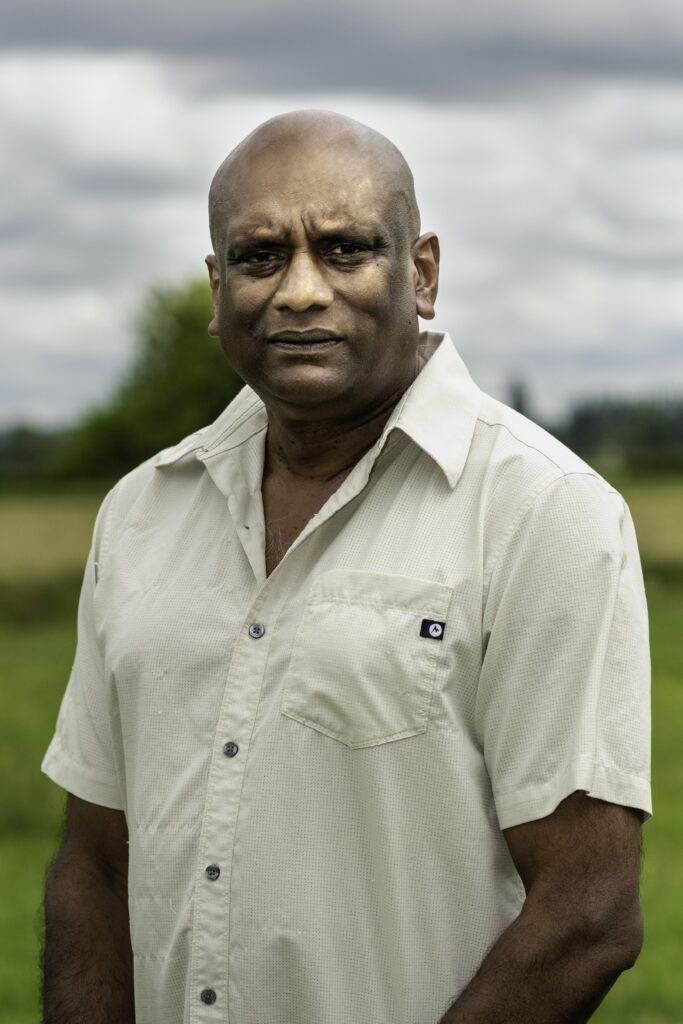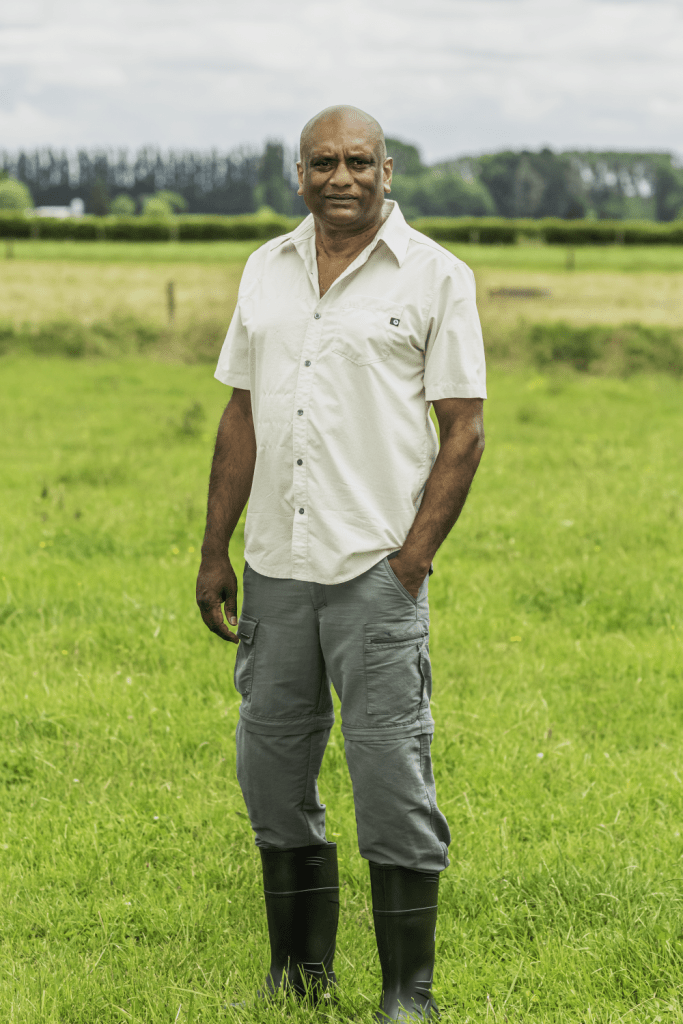
Gordon Rajendram the soil scientist

Rural News

Eminent Soil Scientist Dr. Gordon Rajendram, Hamilton, DiscussesUnprecedented Rainfall, its effects, and how to mitigate it.

Rain, rain, and more rain.In several areas of New Zealand, the yearly rainfall limit has already been exceeded in under six months. Take, for example, the numerous landslides that have occurred, especially in areas prone to erosion, like the hill country in Gisborne, due to the saturation of soils. Ironically, water is the most limiting factor for pasture or crop growth. So are your soil nutrients and farm profits being washed away? Yes, very possibly! Phosphorous loss comes at a considerable cost to farmers and the environment. If the soil has sufficient moisture for leaching, water may carry nutrients away during drainage and disappear below the root zone.Nutrients loosely bound to clay particles or organic matter in the soil are more likely to be washed away through leaching or runoff.The appropriate nitrogen level for a crop is affected by several factors, including its utilisation efficiency. Various elements, such as weather conditions during application, the crop’s wellness and root system, the type of product utilised, and the availability of other nutrients, all have an impact. How can you mitigate the amount of rainfall and its effects? Despite the excessive leaching due to heavy rainfall this year, the forecast indicates that the upcoming season will be comparatively drier. – Welcome news within the agricultural sector. As the upcoming elections approach, there is a hopeful anticipation that the farming industry will receive much-needed relief from the severe impacts of climate change and policy reforms. Farmers need to grow, thrive, and succeed in the industry they are experts in – farming. Dr Gordon Rajendram is a New Zealand Independent Soil Scientist specialising in Soil Fertility,Agronomy & Farm Environmental Consultancy. Gordon Rajendram9 Kakanui Avenue, Hillcrest, Hamilton 3216P: 021 466 077E: rajendram@xtra.co.nzWeb site: http://dev.gordonrajendramsoilscientist.co.nz‘ Bringing science to the farm.’ Phillip Quayphillip@mediapa.co.nzP: 0274 587 724www.mediapa.co.nzfacebook.com/mediapa

Eminent Soil Scientist Dr. Gordon Rajendram, Hamilton, DiscussesUnprecedented Rainfall, its effects, and how to mitigate it. Read More »

New Zealand’s Independent Leading Expert In Soil Fertility, Hamilton-Based Gordon Rajendram, Discusses Sustainability

Futureproofing for SustainabilityThe practice of agriculture meets the needs of present and future generations in textiles andsociety’s food without compromising the ability of current or future generations to meettheir needs.Agriculture is important in our environmental footprint, as it contributes to causing climatechange, water scarcity and pollution, land degradation, and deforestation. I. One way to improve agricultural and food production practices is byincorporating biological and ecological processes such as nutrient cycling, soilregeneration, and nitrogen fixation.II. We can help the environment by using fewer non-renewable andunsustainable resources, especially those that are harmful to theenvironment.III. Farmers’ expertise can be utilised for efficient farming practices and forpromoting self-reliance and self-sufficiency.IV. The cooperation and collaboration of individuals with diverse skills areutilised to address agricultural and natural resource challenges. Thesechallenges encompass pest management and irrigation issues. Sustainability in agriculture must incorporate the following principles: o Providing nutrient-rich food for farmers, farm families, and communitieshelps to maintain good public healtho Farming operations must be profitable, or they risk going out of business. Sustainability requires three key principles:I. It is important to ensure that the fertiliser used remains in the soil and does not getwashed away below the root zone or runoff.Significant this last season as it rained from Nov 2022 through summer, autumn, and winter2023. A significant amount of nutrients, specifically nitrate-N, and sulphate, will be lost through leaching (measured in kg/ha).Applying soluble phosphate to low ASC soils is more likely to runoff or leach – therefore, it isbest to apply a small component of the quick release and the majority as slow release N, P & S fertilisers.  II. Pasture growth costs are relatively low in New Zealand, and farmers excel at themdue to the lack of subsidies, unlike other countries. The price ranges from 1 cent perkilogram of dry matter for sheep and beef to about 6 cents per kilogram of drymatter for dairy. For the system to be sustainable, it is important to grow and convert forage into meat ormilk (protein) at a lower cost to increase efficiency and promotes sustainability. III. Consider incorporating legumes like clover to enhance feed quality and fix nitrogen.Other useful herbs include plantain, chicory, and deep-rooting forages that canabsorb leached nutrients that traditional ryegrass and clover pastures might not.These herbs also have a unique ability to absorb trace elements, which differs fromrye and clover pastures. Farming practices must be ecologically sound, promote healthy biodiversity, and sensiblemanagement of natural resources in order to promote sustainability. Dr Gordon Rajendram is a New Zealand Independent Soil Scientist specialising in Soil Fertility,Agronomy & Farm Environmental Consultancy. Gordon Rajendram9 Kakanui Avenue, Hillcrest, Hamilton 3216P: 021 466 077E: rajendram@xtra.co.nzWeb site: http://dev.gordonrajendramsoilscientist.co.nz‘ Bringing science to the farm.’ Phillip Quayphillip@mediapa.co.nzP: 0274 587 724www.mediapa.co.nzfacebook.com/mediapa

New Zealand’s Independent Leading Expert In Soil Fertility, Hamilton-Based Gordon Rajendram, Discusses Sustainability Read More »

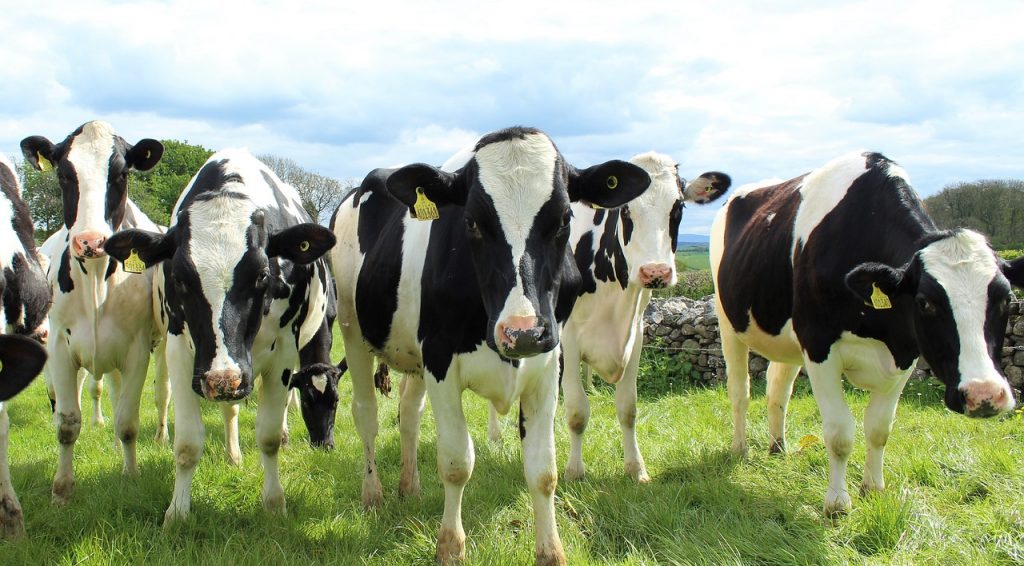
holstein cattle, cows, heifers-2318436.jpg

New Zealand’s Independent Leading Expert In Soil Fertility, Hamilton-Based GordonRajendram, Discusses Reducing Agriculture Emissions Through Improved FarmingPractices

In Aotearoa, New Zealand, half of the gross emissions come from agriculture, which includesthe majority of nitrous oxide and biogenic methane emissions. Agriculture is a significant emitter, but reducing emissions will build the sector’s resilience.To meet our 2050 target, it is crucial to decrease these emissions, specifically biogenicmethane emissions, by 24-47% by 2050.One central approach to reducing emissions is through changes in significant polluters suchas the Tiwai smelter. This could involve transitioning from coal power to a different form ofgas.The second approach is to release water vapour from the exhaust of hydrogen-powered carsrather than a carbon molecule.The 3 rd approach is to reduce carbon (methane, NO 2 and CO 2 ) from agriculture. “As a scientist, I know we must do all these to reduce carbon emissions for asustainable future”. Farmers, scientists, and entrepreneurs in New Zealand are skilled at finding innovativesolutions. Vaccinees are being worked on and testing trials are being conducted.For example, they have discovered a way to reduce methane emissions by feeding cows acertain type of seaweed (as much as 90% reduction) or biochar (15% methane reduction),which also helps to bind nitrogen and reduce NO 2 emission from cow dung and preventnitrate leaching once the biochar gets to 10% of the soil volume. “New Zealand signed up to the Paris Protocol – so we are heading in this directionwhether we agree or disagree”. Livestock accounts for about 75% of agricultural emissions, primarily from biogenic methane.Nitrous oxide from nitrogen fertiliser use accounts for about 3.9% of agricultural emissions.Additionally, we have set separate targets for reducing biogenic methane emissions.Specifically, we aim to decrease biogenic methane emissions by 10 per cent by 2030compared to 2017 levels and by 24 to 47 per cent by 2050.The agricultural industry significantly impacts the environment, accounting for a growingportion of global greenhouse gas emissions. Therefore, the sector must take action to limit the effectsof climate change.There are various ways to decrease nitrous oxide emissions, such as: Reducing production intensity, even by a small amount, can positively impact theenvironment while maintaining profitability. In addition, farmers can offset their greenhousegas emissions by planting trees.Studies have shown that optimising food production by altering farming methods is vital todecreasing emissions from agriculture. By utilising a range of established technologies andpractices currently in use, we could achieve up to 20% of the necessary emissions reductionfor the sector by 2050. Steps to reduce emissions How can we improve the efficiency of pasture and crop production? Reducing nitrogen loss and emissions are firmly connected. The focus is on lowering N-surplus, decreasing imported/harvested feed and reducing methane.Some tips for reducing N-surplus: An effective way to reduce methane emissions is by regulating the feed given. Studiesindicate that there is a connection between methane production and feed consumption. This implies that the more feed given per hectare, the higher the methane emissions will be. Research shows there is a direct link between feed intake and methane produced. For everyadditional kg of total feed eaten per hectare, total methane emissions increaseproportionally. “Feeding Biochar to Cows is an Innovative Solution for Improving Soil Fertility andFarm Productivity”. One of the issues of cattle farming is the urine patch, and high fertility, i.e. the loss ofnutrients in the ground.“If you feed animals with carbon supplement such as biochar, you can reduce methane by15 per cent and nitrous oxide by 50 per cent and reduce nitrate leaching”.To conclude; by the start of 2025 ALL NZ farms must have a written plan to measure andmanage their emissions aligning with the Climate Change Response (Zero Carbon) Act. Dr Gordon Rajendram is a New Zealand Independent Soil Scientist specialising in Soil Fertility, Agronomy & Farm Environmental Consultancy. Gordon Rajendram9 Kakanui Avenue, Hillcrest, Hamilton 3216P: 021 466 077E: rajendram@xtra.co.nzWeb site: http://dev.gordonrajendramsoilscientist.co.nz‘ Bringing science to the farm.’ Phillip Quayphillip@mediapa.co.nzP: 0274 587 724www.mediapa.co.nzfacebook.com/mediapa

New Zealand’s Independent Leading Expert In Soil Fertility, Hamilton-Based GordonRajendram, Discusses Reducing Agriculture Emissions Through Improved FarmingPractices Read More »

New Zealand’s Independent Leading Expert In Soil Fertility, Hamilton-Based Gordon Rajendram, Discusses Soil Health and Its Importance In Farm Profitability.

A recession is looming closer and taking farmers’ profits with it. In addition, farmers continually face rising costs, inflationary pressures, regulatory obligations and increasing demands for sustainably produced food –  the inflation genie is out of the bottle, and it could be challenging to get it back in. As a result, farmers are tightening the purse strings; however, maintaining good soil health during a recession will increase a farm’s long-term profitability. New Zealand’s farming practices have long depended on grass and livestock that eat grass. It has been the economic backbone of the agricultural industry pre the European settlement era and a well-established reputation for being the best at converting pasture to protein as milk and meat. However, there are still areas for improvement in this process. Studies have shown that New Zealand farmers have the smallest carbon footprint when producing milk and meat compared to other countries. During a recession, it’s crucial to comprehend the significance of soil health. A farm’s profitability begins in the soil; therefore, ensuring a farm’s profitability must start with prioritising the soil quality. Farmers benefit from regular soil testing and monitoring to better understand soil conditions. There are sixteen essential elements required for optimal pasture and animal health. However, it’s possible to spend unnecessary money on factors that are not needed. Factors to consider: Phosphate is a key element for plant growth. Any phosphate applied needs to stay in the soil and not runoff as particulate P or leach into subsoils. Much of the loss is related to the soil type, climate, Anion storage capacity, and overuse of soluble forms of P. Mitigating P losses: Proper fertilisation is crucial for enhancing water quality and maximising nutrient use efficiency. On the other hand, incorrect application of fertilisers can harm the quality of grass and crops and eventually animals, resulting in decreased profitability, emphasising the importance of obtaining the correct independent soil advice. Maintenance fertiliser refers to the nutrients needed to balance the nutrients removed from the farm through meat, wool, milk, crops, and silage with the nutrients remaining in the soil. Several factors, including soil type, topography, stocking rate, future land use, crops, and rainfall, impact the requirements for maintenance fertiliser. Different farming operations and production areas on a farm have varying maintenance requirements. Nonetheless, when applying fertiliser, it is vital to aim for soil fertility levels no higher than the recommended nutrient range for optimum plant growth, known as agronomic optimum. In autumn, it is crucial to understand how specific nutrients react in the soil to reduce the risk of nutrient loss. For example, when applying phosphate, avoid high-risk months (April-October),and defer application if rainfall is likely to cause runoff within seven days. When testing the soil it is imperative to avoid dung and urine hotspot patches that can skew readings because of high nutrient levels. Animals excrete 66% of what they eat. The soil can yield lush and nourishing pasture by ensuring a proper equilibrium, resulting in happy animals and contented farmers. Dr Gordon Rajendram is a New Zealand Independent Soil Scientist specialising in Soil Fertility, Agronomy & Farm Environmental Consultancy. Gordon Rajendram 9 Kakanui Avenue, Hillcrest, Hamilton 3216 P: 021 466 077 E: rajendram@xtra.co.nz Web site: http://dev.gordonrajendramsoilscientist.co.nz ‘ Bringing science to the farm.’ Phillip Quay phillip@mediapa.co.nz P: 0274 587 724 www.mediapa.co.nz facebook.com/mediapa

New Zealand’s Independent Leading Expert In Soil Fertility, Hamilton-Based Gordon Rajendram, Discusses Soil Health and Its Importance In Farm Profitability. Read More »

New Zealand’s leading expert in soil fertility, Hamilton-based Soil Scientist Gordon Rajendram (PhD) looks at ways of increasing a farm’s profitability in times of recession

The most economical forage for animals is good nutritious pasture which includes good energy, protein that is digestible and has fibre in it. The cost to produce pasture can cost between 2 – 6 cents per kilo of dry matter. In order to achieve the above, you need to have adequate nutrients in the soil. Farm’s profitability starts in the soil and getting this right will, without doubt, lead to great pasture and better soil health, i.e., it is aerated, it holds onto the nutrients, whatever is applied doesn’t leach and the right forage types. Having a variety of species of forage is beneficial i.e., grass, clover, herbs etc. The importance of independent soil management and fertiliser advice is crucial rather than just someone trying to sell a product. There appears to be major conflicts of interest in this area. Large savings can be made if the advice is correct. The 16 elements are required for pasture and animal health. In some cases, excess money is spent on elements that are not necessary and hence the importance of independent advice. Soil management is an expert area and one which can lead to better profits. Sampling is one of the crucial aspects of soil management. Soil is important at the start and pastures grown on this are essential for farm profitability.  New Zealand is the best at converting pasture to milk and protein (meat) but there are still ways this can be improved. New Zealand farmers have the lowest carbon footprint to produce meat and milk Published research shows that NZ farmer’s carbon footprint to produce meat and milk is the lowest compared to other countries. In the dairy sector, the emissions to produce 1 litre of milk have been estimated to be 0.9 kg CO2 when compared to the global average of 2.4 kg CO2 per litre of milk. In the NZ dairy sector, PKE was the main supplementary feed type used on farms. PKE though has the highest carbon footprint of any brought-in supplementary feeds. NZ’s carbon footprint to produce beef is one of the lowest with ~9 kgCO2e/kg LW and NZ’s carbon footprint to produce sheep is the lowest at ~6 kgCO2e/kg LW.  This is due to the NZ lower cost pasture grazed-based systems. Compare this to say in many parts of the world where pasture or crops are cut and carried and fed in a shed system. Studies have shown for humans to have a balanced diet a component of milk and meat is required. A lot is going on below the ground (leaching) so this has to be prevented and lead to greater profits. Accurate testing is essential to ensure more efficient ways of nutrient uptake. There must be nothing limiting this process in the soil. Whatever is applied you must make sure the soil can hold onto this and that it is not leached. Having a whole lot of fertiliser on top is only part of the process. Having knowledge of what is going on underneath the ground is critical to profitability. Contact Gordon: Email: rajendram@xtra.co.nz Facebook: https://www.facebook.com/Gordon-Rajendram-Soil-Scientist-830978353759572/ Contact MediaPA: Phone: 0274 587 724 Email: phillip@mediapa.co.nz Website: www.mediapa.co.nz Facebook: www.facebook.com/MediaPA Twitter: twitter.com/NZ_MediaPA YouTube: www.youtube.com/user/TheMediaPA Pinterest: www.pinterest.com/NZMediaPA

New Zealand’s leading expert in soil fertility, Hamilton-based Soil Scientist Gordon Rajendram (PhD) looks at ways of increasing a farm’s profitability in times of recession Read More »

cow, jersey, dairy-2317992.jpg

Hamilton-based Soil Scientist Gordon Rajendram recently visited An efficient dairy farming system – Ngatimaru Farms – and these are his findings.

The farm and production: I consult to dairy farmers Rick and Dianna Bourke whose farm is inEiffelton, 15 minutes away from Ashburton. The farm is approximately 10 km from the Canterbury East Coast.They have a Jersey herd of 740 cows, with cow weights on average being 425 kg. The cows dietconsists mainly of pasture with in shed feed of 2 kg of a blend/cow/day and the farm is irrigated.The average farm milk production over the past three years has been 350,000 MS/year with theaverage cow production being 480 MS/cow. If you don’t test you cannot manage: The farm was comprehensively soil tested (called soilbenchmarking a farm) to determine the nutrient and soil pH status of the farms in winter of 2020when cows were wintered off. Tests included anion storage capacity (ASC), cation storage capacity (CEC), Olsen P, resin P, Sulphate-S; exchangeable calcium, magnesium, potassium and sodium; TP, TS, TN, TC, organic matter, and trace elements boron, copper, zinc, cobalt, selenium and molybdenum.Through a comprehensive testing and data analysis, paddocks were identified that were belowoptimum, at optimum or above optimum for each nutrient. From this nutrient density maps were created for each nutrient or soil parameter. The results from the testing showed that the soil on the farm had low Phosphate retention (ASC) and Sulphur retention ability.Pasture and clover only was determined for its nutrient content in spring and autumn when the pasture is actively growing. Pasture growth rates and pasture covers on the farm are measured weekly by GrassCo. Minimal N and Fertiliser use:The nitrogen applied on the farm over the last 3 years has been on average 74 kg N/ha/year, applied via foliar spray using a 6200 L AMAZONE spray unit. Other elements and trace elements that can be solubilised are applied with the foliar nitrogen as required based on soil and pasture testing. Lime was applied to achieve a soil pH of ~ 6.4Phosphate applied to paddocks as RPR or Di-calcic if Olsen P <20 and P withheld if Olsen P >30.Sulphur applied at 30 kg/ha using elemental S to all paddocks.The soils were very compacted. One of the reasons for the compacted soils is because of thenaturally high magnesium levels. To help fix the compaction issue and aerate the soil, theAgraforum soil conditioning program was used. Forage with multi species:Multi species (~ 9 – 11 species) was grown on a few paddocks and compared to rye grass/cloverpaddocks. A root enhancing product was applied to improve root growth. Outcomes from the visit as summarised:Duncan Barr, is measuring the grass growth using GrassCo technology on the farm, commented: “It is very noticeable how good, even and dense the pasture growth is compared to other farms”. “It’s as if they are using 300 kg/ha/year of nitrogen when they are actually using much less”.This farm has low, but efficient use of fertiliser and nitrogen to produce quality pasture, and consequently the cost to produce milk is very low.Cows produce extra 1 Litre of Milk when cows graze on multi species paddock compared to when grazed on just ryegrass clover paddocks.This is an extra 0.1 kg of milk per cow which equates to ~$0.90/cow/day. So, for the 740-cow herd it is an extra income of ~$660 per day when the multi species is grazed. The plan now is to put more paddocks into multi species.

Hamilton-based Soil Scientist Gordon Rajendram recently visited An efficient dairy farming system – Ngatimaru Farms – and these are his findings. Read More »

Improve the quality of your soil

Soil testing and soil sampling is critical to improving the quality and mineral balance ofyour soil.The vital point of soil testing is to determine if there are sufficient levels of the essentialelements for plants and livestock to grow at their best.All physical things in the universe are made from 92 naturally occurring chemicalelements. Living things such as plants and animals are mostly made of certain elements,depending on the life form. These are known as the essential elements of life, meaningthat if all the other elements are present, but if one of these elements is missing, thenthe organism will fail.There are 13 elements were needed for plant and animal growth, not just nitrogen (N),phosphorus (P) and potassium (K). A further three elements (cobalt, selenium andiodine) are essential animal health and nutrition. If your soil is deficient in one or morenutrients, your livestock and plants are not going to be able to receive enough of thosenutrients to grow properly.If farmers are injection or bulleting animals for any deficient nutrients such as Cobalt,Selenium , Iodine or any nutrient it is a soil borne disorder. Injecting, bulleting orsupplementing nutrients to animals overcomes the problem short term rather than fixingthe cause, which is a soil borne disorder. Its equivalent to taking medication rather thanfixing the root cause. Testing of soil, pasture, clover only or animal bloods is relatively cheap. Coming in atless than 1% of your total fertiliser costs, it is a cost-effective investment in the healthand wellbeing of your plants and livestock.When it comes to your livestock, if the pasture they are eating does not contain correctamounts of the right nutrients they will not grow in a healthy manner, or worse, becomesick.Most dairy farms probably need only about 13kg/ha of P per year to maintain theirphosphate levels, but more than 70kg/ha is sometimes applied, leading to massiveexpenditure. This money could be diverted to overcome any deficient nutrient.Accurate soil testing also provides a significant management tool in creating an efficientsoil fertility programme, as well as watching out for potential soil issues.

Improve the quality of your soil Read More »

The Road to Healthy Profits

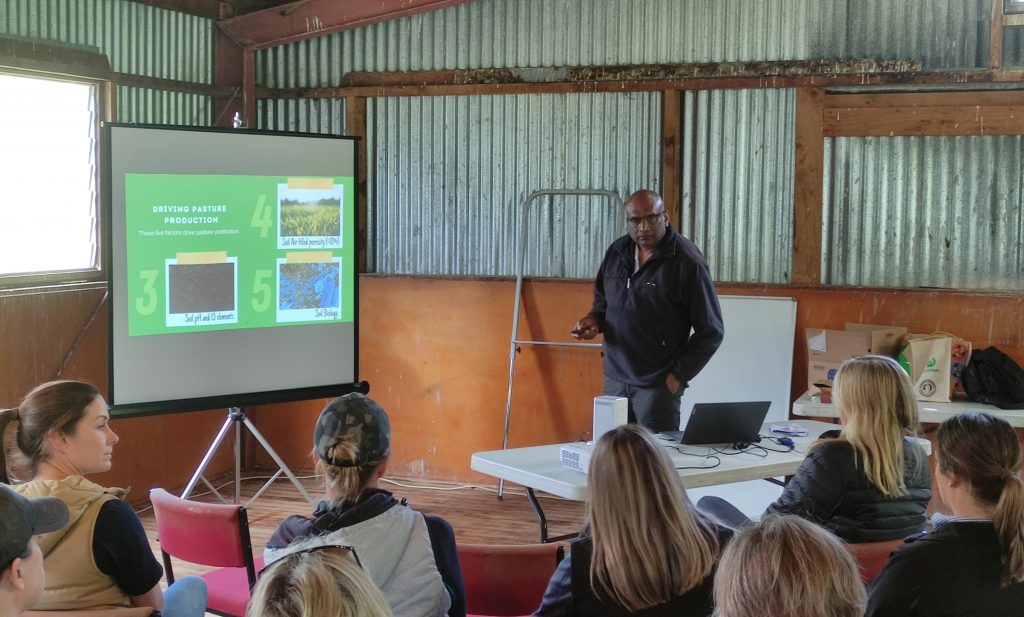
Written by Sean Toohey Healthy Animals Means Healthy Profits We recently had the pleasure of participating in the Wairarapa Rural Women’s Initiative Discussion Group.  The theme of the October meeting was better farm management through alternative fertiliser options. The event was held in the woolshed at our very own Jeane Fowler’s sheep and beef farm in Alfredton. A group of twenty or so farming ladies and a few farming fellas got together to hear from two industry experts on practical considerations when considering a move to alternative, environmentally friendly and financially sustainable practices to run a productive, profitable farming operation.  That’s quite a mouthful but that is exactly what the session was all about. Joining us on the day were Gordon Rajendram, a Waikato-based soil scientist who helps New Zealand farmers make better fertiliser decisions, and Raymond Burr, ex-dairy farmer and owner of independent testing lab Qlabs in Waipawa. Gordon and Ray both tackle the opportunity to change from a dollars and cents perspective. A view they hold in common is that farming profitability starts with healthy soil to generate nutritious plants that provide a healthy well-balanced feed for the animals.  It is more than just a consideration of cost of inputs vs outputs, there are many benefits to starting with what’s in the soil that deliver direct to the bottom-line of a farm’s profitability. Ray and Donna’s Journey Ray and Donna Burr converted their sheep and beef farm in King Country to a dairy platform back in 1990, milking 520 cows back when the average cow herd was 125 cows. They were quite innovative in what they were doing until the wheels fell off.  Too much nitrogen, too much phosphate and too many health issues with the cows. After receiving little useful information from some of the top scientists in New Zealand and consulting a laboratory that could not offer independent advice, Ray sought out a niche laboratory in Hawkes Bay which was able to offer him analysis and advice across the full 13 elements.  Ray says “The animal health turn around on the farm was simply amazing. After 3 years: no CIDRs, no inductions, no downer cows, a ten-week mating period, eight-week calving period and a vet visit once per year.” Increased milk solids per cow and some very healthy improvements to the bottom-line of the farm. Raymond Burr, Qlabs ”The animal health turn around on the farm was simply amazing. After 3 years: no CIDRs, no inductions, no downer cows, a ten-week mating period, eight-week calving period and a vet visit once per year. Raymond BurrOwner, Qlabs and ex-Dairy Farmer Ray, Donna and one herd manager ran the 520 dairy cows and around 250 young stock.  The three of them did all their own crops, regrassing and fertiliser applications.  Nitrogen use went down to 15 kilograms of urea per hectare for one third of the farm in the first rotation.  As Ray says “I don’t think we needed it, but hey it was a feel good factor”. The laboratory Ray sought out in 2000 was Quantum Laboratories, the New Zealand arm of a US operation.  Ray and Donna bought the business outright in 2016 and run the renamed QLabs as an independent, family-owned laboratory that is focused on animal performance starting with the soil and the plant.  Today from its beginnings as Quantum Laboratories, QLabs has been in operation for 45 years.  QLabs recently patented RNJE – urinary nitrogen evaluation from testing pastures which offers farmers a pragmatic measure to assess how to moderate N losses and nitrous oxide volatilisation. Show Me The Money As Ray says “It’s all about soil health, plant health and animal health. And at the end of the day, it’s the animals and their produce that fund the whole operation. Kilograms of dry matter? Anybody can grow kilograms of dry matter, just add urea. But that is not animal performance. We soil test for all 13 elements in the lab and we won’t make a fertiliser recommendation, unless we’ve tested for all of them because something small might be the limiting factor.” The Bottom Line? On their King Country dairy farm, they achieved a cash flow turnaround of approximately $250,000 per annum within 3 years – milk pay out adjusted.  Ray took the group through an interactive whiteboard session to demonstrate the operational and cash flow benefits of improved animal health across a farming platform. It was very much “dollars and sense” discussion and, yes, it starts in the soil. Soil Scientist Gordon Rajendram Dr Gordon Rajendram (PhD) is a Waikato-based soil scientist.  With more than 35 years’ experience in analytical testing, applied research including 22 years at AgResearch in Ruakura, Gordon now provides independent advice to farmers and fertiliser companies around New Zealand. Gordon Rajendram, Soil Scientist ”Soil testing allows farmers to make the best and most informed, data-based decisions for their farm, resulting in healthier land and stock as well as making a difference to your bottom-line Gordon RajendramSoil Scientist Gordon started by touching on the five universal factors in the soil that drive pasture growth: soil temperature above 5 or 6 degrees celcius (at 10cm depth), soil moisture above 25%, soil pH (ideal pH range 6.2-6.5) and 13 nutrients, good structure and porosity for air flow and good soil biology.  These are like the soil hygiene factors for good pasture growth. Testing 1,2,3 Gordon’s non-negotiable is that soil, pasture and animal blood tests are key if farmers want to get the most out of their fertiliser applications.  Soil and herbage tests will provide farmers with accurate data about the mineral imbalances that may be affecting the health of their crops or livestock. For Gordon, the devil is always in the data details. He advises “Soil testing allows farmers to make the best and most informed, data-based decisions for their farm, resulting in healthier land and stock as well as making a difference to your bottom-line”. His recommendation is to develop fertiliser programmes specific to different areas on your

The Road to Healthy Profits Read More »

The importance of independent soil advice

    The fertiliser industry is one of several large service industries that form an important role within the New Zealand economy. Could there be an increasing demand for independent advisers from farmers looking to ensure their best options for soil fertility? I recently did a presentation on soil fertility, soil nutrients and their fate to the Wairarapa Rural Women’s Initiative Group in Alfredton. Although the group are still relatively early in their journey toward alternative inputs, the presentation provided valuable information moving forward The presentation raised points outlining the importance of soil input, plant, animal and soil health:  

The importance of independent soil advice Read More »

Growing Good Dirt

When a young Gordon Rajendram took a casual summer job at Ruakura Research Centre, no-one involved had any inkling that he would go on to be a research trailblazer and a leading expert around soil fertility.  Although that summer job was undertaken while studying for his first degree at Waikato University – Ruakura Reserarch Centre went on to play a pivotal role in Gordon’s career and he ended up working at the prestigious Research Centre for 22 years. Now with BSc, MSc and a PhD to his name, Dr Gordon Rajendram is widely regarded as a pioneer in laboratory measurement techniques for chemical, biological and physical properties in materials (aka he specialises in soil fertility). He holds a number of patents (five to be exact) and along the way has been nominated by AgResearch for Kudos Awards: Scientist of the Year in 2008 for work done on the soil sulphur test and its agronomic advice. He was also nominated by Ministry of Science and Innovation for Kudos Awards: Science Entrepreneur of the Year in 2010 for his work done on precision farming. Continuous growth And now in the next phase of continued development, Gordon has recently launched his new website (gordonrajendramsoilscientist.co.nz): dedicated to helping farmers get the most out of their soil, and providing soil knowledge to help farms work more efficiently and sustainably, while improving profitability.  Specialising in independent soil advice, Gordon brings more than 35 years of experience in analytical testing development, applied research and consulting to farmers and fertiliser companies.  “This website has been a long time coming and I am excited to finally share it,” he says.  Information shared on the website also highlights the importance of getting soil tested and why this needs to be done regularly. “Soil testing can help you more effectively use plant nutrients and reduce the leaching or runoff into waterways,” says Gordon. Helping to demystify the science around soil, Gordon is driven to help farmers on their journey to getting an accurate read on what elements are needed in their soil.  “With increasing fertiliser costs, soil and pasture testing are key if farmers want to get the most out of their fertiliser. And the way to do this is through soil and pasture/herbage testing. “Soil and herbage testing give accurate data about the mineral imbalances that may be affecting the health of your crops or livestock. Soil testing allows you to make the best and most informed, data-based decisions for their farm, resulting in healthier land and stock as well as making a difference on your bottom line,” advises Gordon. After soil testing, a fertiliser programme can be developed specific to each paddock or area which will save money by determining the correct proportion of fertiliser to apply in each paddock or area. Spreading on too little fertiliser is just as wasteful as applying too much.” Early Days Having moved to New Zealand when he was nine years old, Gordon’s introduction to rural living came via time spent on the two farms at St Peter’s School in Cambridge, where his father taught.  “In fact, I pulled out ragwort on one of those farms when I was about nine years old – and got paid for it!” Following that early introduction to farm labour, Gordon went on to experience other elements of rural life, involved in haymaking and milking cows on a Taupiri farm before heading to university to pursue his studies.  Any time not dedicated to researching knowledge, was spent playing or watching a variety of sports, from rugby and league to cricket and tennis. Quiet achiever While Gordon has prolifically achieved throughout his career, his soil fertility research has by no means made him a household name, even though the impact of his research has been far reaching in farming, horticultural and fertiliser industries. Much of his work has been included in Overseer. Unfortunately, minimal government funding has drastically reduced research work being carried out, but Gordon continues his commitment to sharing his knowledge and insights.  A member of New Zealand Society of Soil Science and of New Zealand Grasslands Society, he has more than 70 publications to his name (mainly achieved while working at MAF and its predecessor AgResearch, Ruakura Research Centre in Hamilton). Among the many areas his research has impacted is his study into Soil Nitrogen (N) and Field Calibration. In 2008, he developed a field calibrated pastoral soil N test for New Zealand which would benefit NZ agriculture massively.  Revolving around the strategic use of N fertiliser on areas of farm based on the N status (Organic –N and the easily mineralised N fraction) of the soil; this IP was brought by Ballance Agri nutrients as part of an $18 Million funding deal with MSI and AgResearch. It was initially called ‘N Guru’ but has been renamed as ‘Pasture planner’.  Much of Gordon’s research and knowledge can be found on his website and Farm Trader welcomes him to its team of regular columnists also. 

Growing Good Dirt Read More »

Scroll to Top